Work ends at 5 PM. The tension stays. Why does a day at the desk live in our neck and back?

- Remove the current class from the content27_link item as Webflows native current state will automatically be applied.
- To add interactions which automatically expand and collapse sections in the table of contents select the content27_h-trigger element, add an element trigger and select Mouse click (tap)
- For the 1st click select the custom animation Content 27 table of contents [Expand] and for the 2nd click select the custom animation Content 27 table of contents [Collapse].
- In the Trigger Settings, deselect all checkboxes other than Desktop and above. This disables the interaction on tablet and below to prevent bugs when scrolling.
Desk work has a peculiar talent: it can tire the body even though for eight hours it has barely moved. By the end of the day the neck is stiff, the shoulders feel heavier, and tension between the shoulder blades becomes impossible to ignore. The body presents a bill for every hour spent in one position, including the moments when we lean closer to the screen, raise our shoulders during a difficult conversation, or freeze over a task, forgetting everything except the next deadline.
It isn't always a matter of the wrong chair. Sometimes the biggest strain is simply stillness.
The body doesn't like being furniture
Even the most ergonomic position stops being comfortable if we stay in it too long. The muscles responsible for stabilizing the head, neck, and shoulder girdle remain in a constant, if slight, state of readiness. They don't do any spectacular work, but they never get a real chance to rest. Over time, their subtle effort starts to feel like stiffness, heaviness, or the familiar urge to tilt your head back and finally "stretch your back".
A screen set too low, a phone held at knee height, or a laptop that practically invites you to round your back doesn't help. The head moves forward, the shoulders follow, and the body gradually curls around the computer, as if trying to fit itself to a small rectangle of light.
Then there's emotional tension. Stress rarely stays only in our thoughts. It can lift the shoulders, clench the jaw, and shallow the breath, often so subtly that we notice it only after work. By then the body already knows what the head didn't have time to accept all day: it was under strain.
The best position? The next one
A desk set at the right height, back support, and a screen at roughly eye level can make work more comfortable. But there is no single ideal position in which the body will happily stay from morning coffee until the last browser tab is closed. It needs change.
It doesn't always have to be a full set of exercises. Sometimes it's enough to stand up during a phone call, walk over for a glass of water, gently roll your shoulders back a few times, or look away from the screen for a moment. Such short breaks don't look impressive, but that's exactly why they're easy to build into the day. Their job isn't to turn the office into a gym. They simply remind the body that it was made to move, not to wait patiently for the end of the day.
It's also worth noticing the small habits that usually stay out of frame: a phone pinned between shoulder and ear, one leg always crossed over the other, or hands hovering over the keyboard. The point isn't to police yourself strictly. Just check now and then: can your shoulders drop, your jaw relax, and your breathing feel a little freer?
In the evening, don't fix your body. Take care of it
After an intense day, it's easy to treat tension like one more task on the list: quickly stretch the neck, take a hot shower, and tick off recovery. But the body isn't a project with a deadline. It responds much better to regularity, calm movement, and touch that doesn't try to force anything.
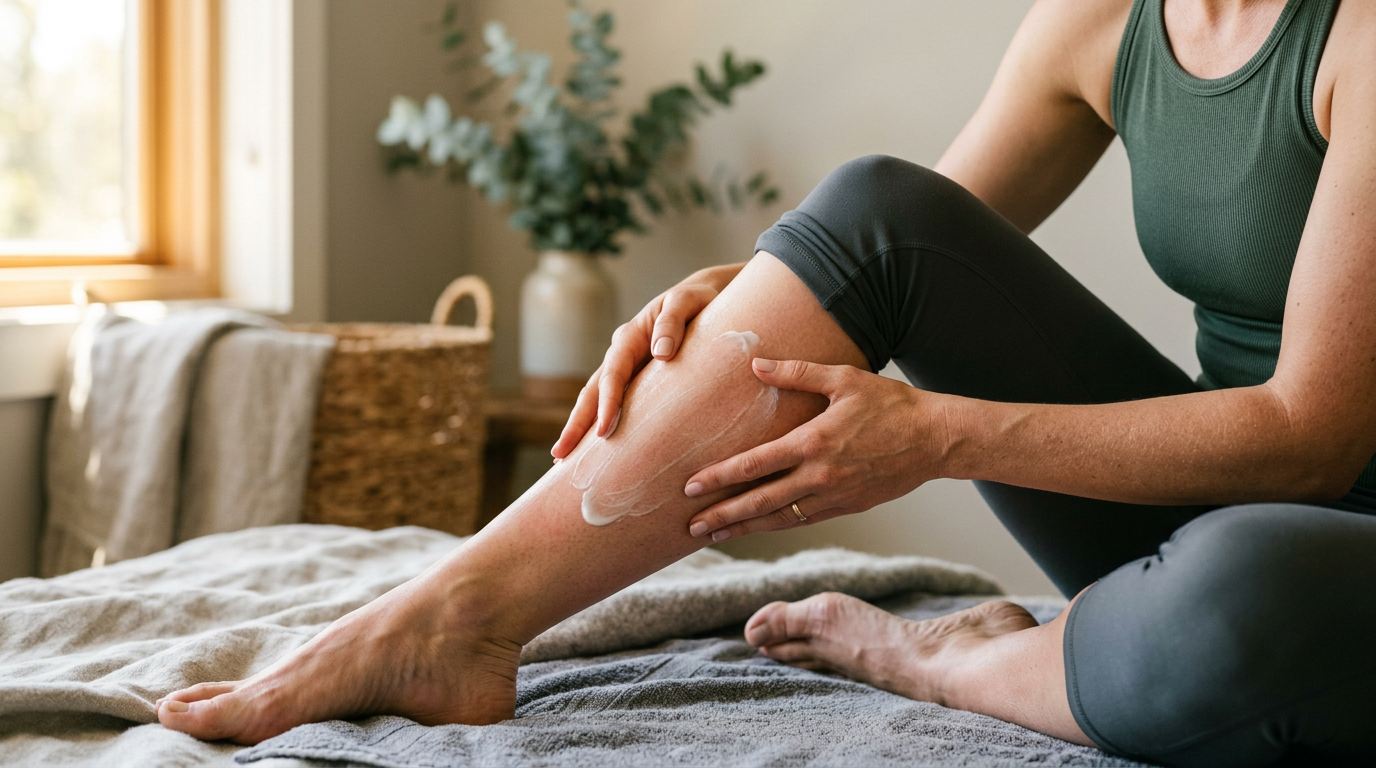
A few minutes of gentle self-massage can become an evening signal that the day is really over. It's a good moment to consciously relax your shoulders, roll them in slow circles, and focus on the areas where tension tends to collect.
You can add Gorvita Devil's Claw Balm to this ritual. Its formula combines extracts of devil's claw, comfrey, boswellia, juniper, and mountain arnica, which help relax the muscles and care for the joints. The balm's allantoin and provitamin B5 moisturize, soften, and smooth the skin, while the plant ingredients are supported by healing mineral water rich in trace elements and bioelements. Gently massage the product into the skin until absorbed, turning routine application into a short moment of mindfulness directed at your body.
Recovery doesn't always need an elaborate plan. Sometimes it starts with lowering your shoulders, taking a deeper breath, and spending a few minutes when nothing needs to be sped up. And if tension keeps returning, is severe, or comes with numbness, tingling, or restricted movement, it's worth consulting a specialist. The body speaks quietly. Better not to wait until it has to raise its voice.