- Remove the current class from the content27_link item as Webflows native current state will automatically be applied.
- To add interactions which automatically expand and collapse sections in the table of contents select the content27_h-trigger element, add an element trigger and select Mouse click (tap)
- For the 1st click select the custom animation Content 27 table of contents [Expand] and for the 2nd click select the custom animation Content 27 table of contents [Collapse].
- In the Trigger Settings, deselect all checkboxes other than Desktop and above. This disables the interaction on tablet and below to prevent bugs when scrolling.
After the age of 25, your body starts producing less and less of the protein that holds it "in one piece". Although collagen is most often associated with beauty salons or sports rehabilitation, the truth is that it builds almost every corner of your body. And sooner or later – whether you train for a marathon or sit at a desk – you will feel it running low.

What do children's bones need?
A growing body is constantly building new tissue, and the pace is impressive. A three-year-old is usually just under a metre tall, and as an adult will be about 70–80 cm taller, almost twice as tall. During puberty, a teenager can grow as much as 10 cm in a single year. Every one of those centimetres is new bone tissue, so children's bones need a steady supply of building material. Calcium and vitamin D are needed for normal growth and development of bone in children and teenagers. A varied diet remains the foundation, and a supplement can complement it, for example in picky eaters.
More energy for movement – support for active people
Why are athletes so keen on collagen? It is a key building block of the musculoskeletal system, which needs solid support during intense exercise. When joints start to protest, we look for real help, not just short-term relief. Research shows that regular supplementation with collagen peptides reduces pain during activity, which doctors have also confirmed [1].

The participants were young, active people. We write about looking after your mobility in the years that follow in the article Healthy joints after 40.
How does collagen affect skin firmness?
The first signs of change show up in the mirror. A fine line around the eye becomes visible, and the complexion looks tired after a night's sleep. That is usually when we think of collagen. Quite rightly – research confirms that taking hydrolysed collagen regularly improves skin hydration and elasticity [2].
Better shape without sacrifice – diet and supplement together
Collagen also comes up when we talk about body shape, though less often. In one study, women who did strength training and took collagen gained more fat-free mass and lost more body fat than those who only trained [3]. In that study, collagen and training worked together. A supplement alone will not build muscle. But added to a training plan, it becomes a quiet ally in the effort to get in better shape.

Menopause – two strong reasons for collagen
During menopause, the body goes through a big change. As oestrogen levels fall, the skin becomes thinner and drier, loses firmness, and collagen is lost in its deeper layers – signs you can see with the naked eye every day [4]. The second reason lies deeper: after menopause, bones lose mass and mineral density, become more fragile, and the risk of osteoporosis and fractures rises markedly [5]. Researchers in Freiburg followed 131 postmenopausal women with reduced bone density for a year: some took collagen peptides, others a placebo. In the collagen group, bone density in the spine and the neck of the femur increased [6]. Bones also benefit from calcium and vitamin D, which contribute to the maintenance of normal bones. Collagen does not change hormonal balance itself, but it is hormones that dictate how much of this building block stays in the body.

Which Colafit to choose? A short product guide
All Colafit cubes are taken the same way: one a day, in the morning, on an empty stomach, at least 10 minutes before eating. They can be taken without water. Colacal and Colafit Slim capsules are swallowed in the morning and in the evening with water or juice.
Colafit (60 and 120 cubes) – a pure portion of collagen every day
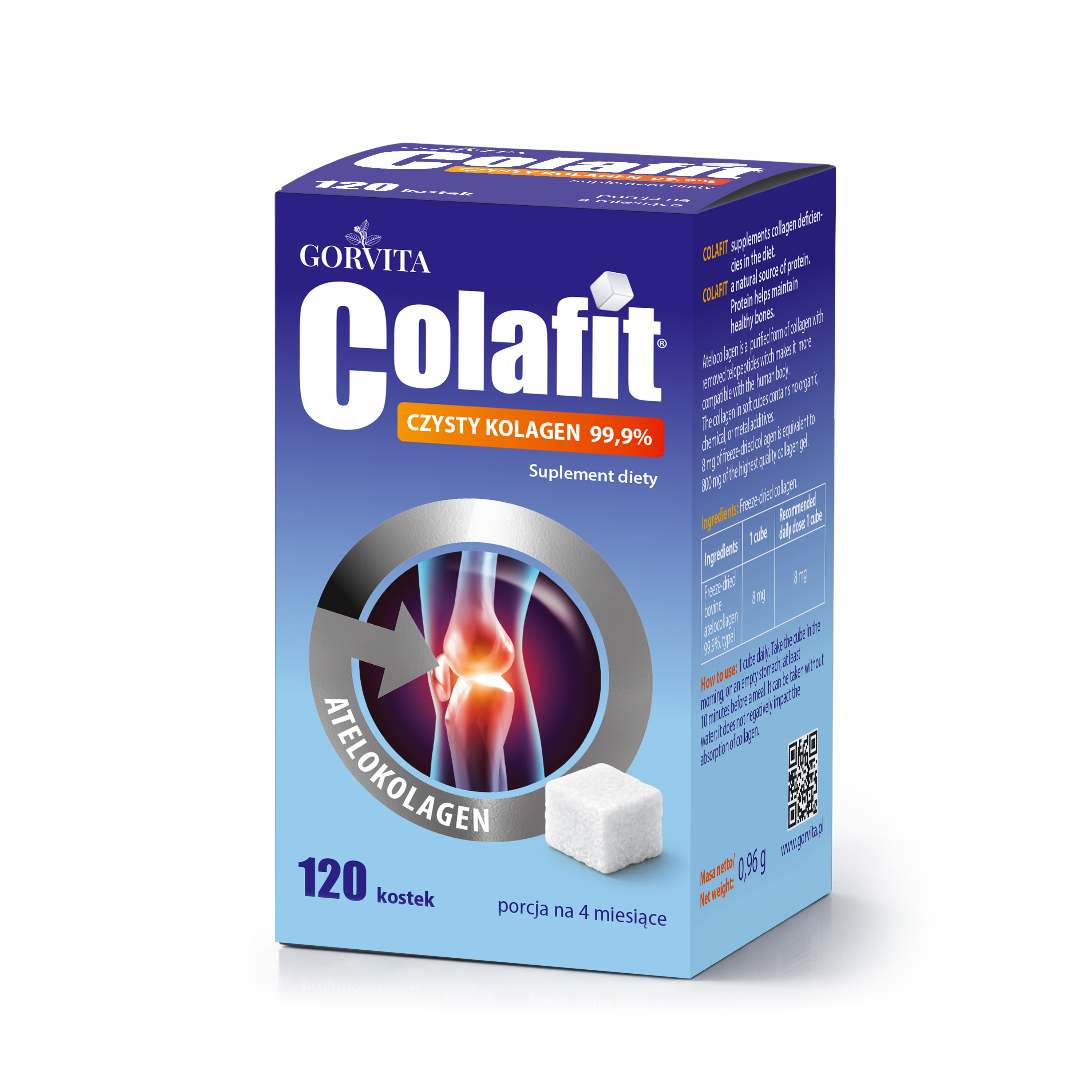
- 8 mg of freeze-dried bovine type I collagen per cube, with no additives,
- for adults over 30 who look after their skin, joints and bones,
- Colafit 60 cubes lasts two months, and Colafit 120 cubes about four.
Colafit Extra Strong – extra power with vitamin D
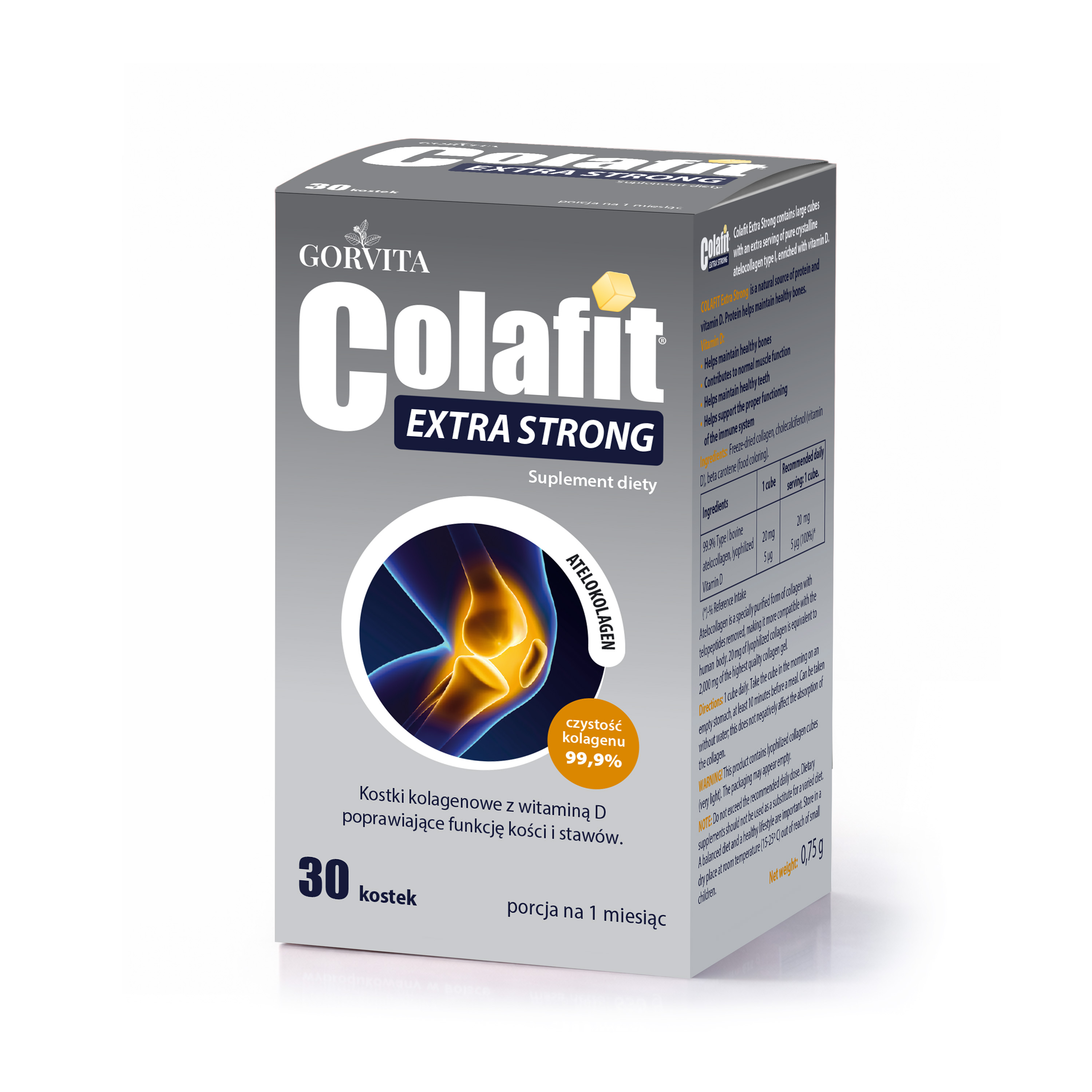
- 20 mg of collagen and 5 µg of vitamin D per cube, i.e. 100% of the reference intake for this vitamin,
- vitamin D contributes to the maintenance of normal bones and normal muscle function,
- Colafit Extra Strong is a good choice during menopause and for anyone who wants to look after their bones.
Colacal – a solid dose of calcium for the whole family
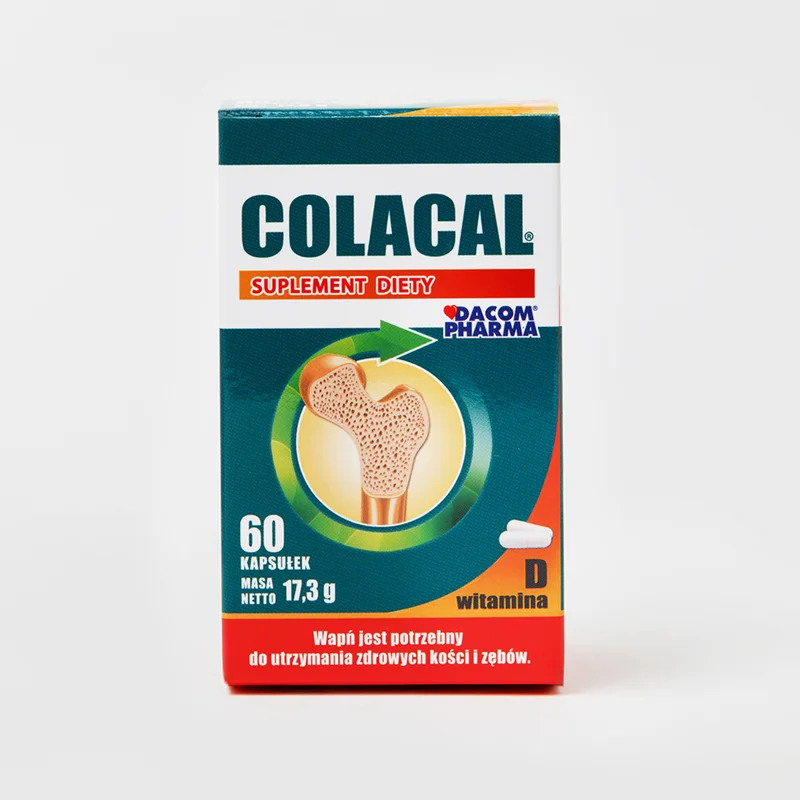
- two capsules provide 6 mg of collagen, 500 mg of calcium (62% of the reference intake) and 5 µg of vitamin D,
- children from 3 years of age take one capsule a day,
- Colacal is best taken for at least 6–12 months.
Colafit Slim with chitosan – support for those watching their figure
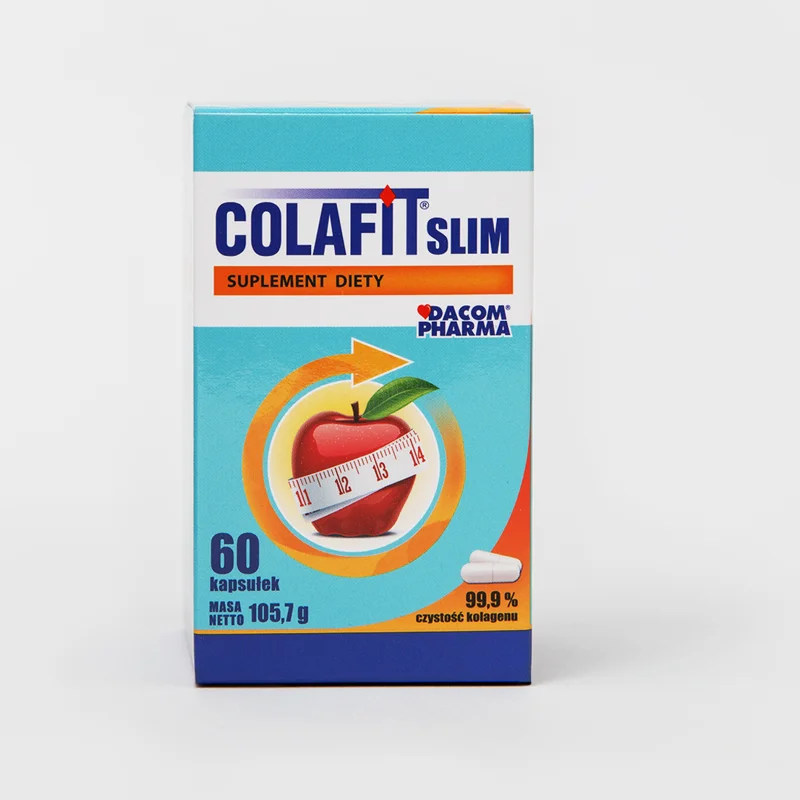
- two capsules provide 1000 mg of glucomannan, 300 mg of chitosan, 20 mg of vitamin C, 10 µg of chromium and 2 mg of collagen,
- vitamin C contributes to normal collagen formation for the normal function of skin,
- chromium contributes to the maintenance of normal blood glucose levels,
- Colafit Slim is intended for adults on a low-calorie diet.
Colafit Junior – a strawberry flavour children will love
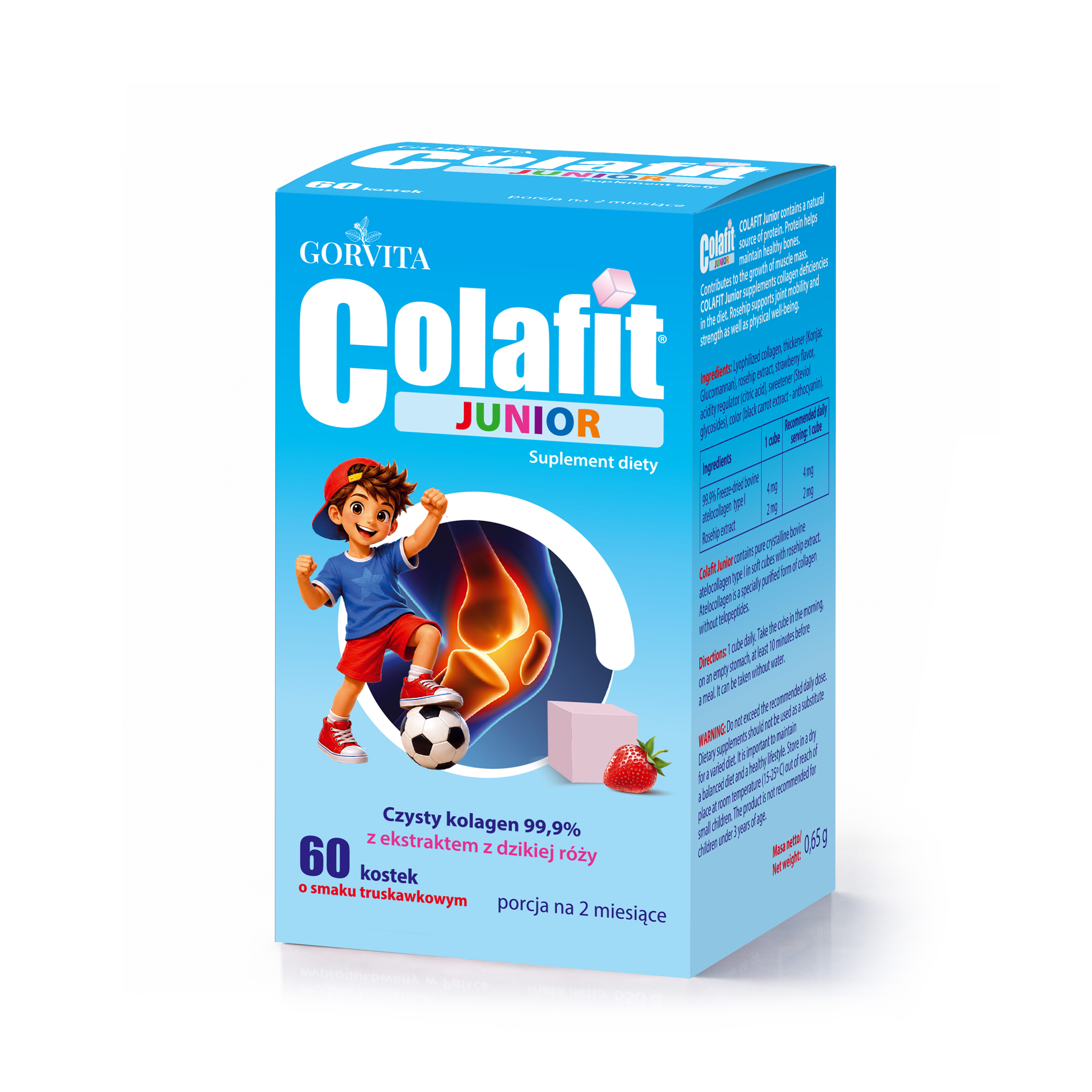
- 4 mg of collagen and 2 mg of wild rose extract per daily portion,
- strawberry flavour, sweetened with stevia,
- Colafit Junior is intended for children over 3 years of age.
Everything you need to know about collagen
Can collagen cause side effects?
Collagen in a supplement is a protein, and in the Colafit range it comes from bovine collagen. People allergic to any ingredient of the product should not take it. During pregnancy and breastfeeding, consult a doctor or pharmacist before taking the supplement. Do not exceed the recommended daily portion.
What time of day is best for supplementation?
A Colafit cube is best taken in the morning, before breakfast: at least 10 minutes before a meal is enough. It can be taken without water. Colacal and Colafit Slim capsules are taken in the morning and in the evening with water or juice.
When will I see results?
Collagen does not work overnight, because the body needs time to make use of it. In the studies described above, effects were visible after just 3 months of daily use. In the bone study, participants took collagen for a whole year. So give yourself and your body time, and treat the morning cube as a daily ritual rather than a one-off course.
What is atelocollagen and why is it so valued?
A collagen molecule resembles a twisted rope with short, loose ends on both sides. These ends are called telopeptides. They contain most of the fragments the body may react to as a foreign substance. Atelocollagen is collagen with these ends removed. What remains is only the spiral part of the molecule: pure and better tolerated. That is why this form has long been used in medicine too, for example in dressings and tissue repair materials. Colafit contains bovine type I atelocollagen with 99.9% purity.
Why freeze-dried collagen?
Freeze-drying is drying by freezing, which keeps the protein in a stable form. Water evaporates at a low temperature, so collagen keeps its structure, which could be damaged by drying with heat. A cube dried this way stays fresh for a long time and needs no preservatives. Classic Colafit contains only collagen, and the pack can simply be kept in a dry place at room temperature.
Support at every stage of life
Collagen is a natural building block of our body from birth. It is the protein that holds joints, bones and skin together. During growth, the body needs the most of it. With age, however, its natural reserves begin to shrink. That is why looking after this building block is simply support that all of us need, whatever our age.
Sources
[1] Zdzieblik D, Oesser S, Gollhofer A et al. Improvement of activity-related knee joint discomfort following supplementation of specific collagen peptides. Applied Physiology, Nutrition, and Metabolism 2017;42(6):588–595. PubMed
[2] Pu SY, Huang YL, Pu CM et al. Effects of Oral Collagen for Skin Anti-Aging: A Systematic Review and Meta-Analysis. Nutrients 2023;15(9):2080. PubMed
[3] Jendricke P, Centner C, Zdzieblik D et al. Specific Collagen Peptides in Combination with Resistance Training Improve Body Composition and Regional Muscle Strength in Premenopausal Women: A Randomized Controlled Trial. Nutrients 2019;11(4):892. PubMed
[4] Hall G, Phillips TJ. Estrogen and skin: the effects of estrogen, menopause, and hormone replacement therapy on the skin. Journal of the American Academy of Dermatology 2005;53(4):555–568. PubMed
[5] Subarajan P, Arceo-Mendoza RM, Camacho PM. Postmenopausal Osteoporosis: A Review of Latest Guidelines. Endocrinology and Metabolism Clinics of North America 2024;53(4):497–512. PubMed
[6] König D, Oesser S, Scharla S et al. Specific Collagen Peptides Improve Bone Mineral Density and Bone Markers in Postmenopausal Women – A Randomized Controlled Study. Nutrients 2018;10(1):97. PubMed
This article is for information only and does not replace medical advice.