

.avif)
- Remove the current class from the content27_link item as Webflows native current state will automatically be applied.
- To add interactions which automatically expand and collapse sections in the table of contents select the content27_h-trigger element, add an element trigger and select Mouse click (tap)
- For the 1st click select the custom animation Content 27 table of contents [Expand] and for the 2nd click select the custom animation Content 27 table of contents [Collapse].
- In the Trigger Settings, deselect all checkboxes other than Desktop and above. This disables the interaction on tablet and below to prevent bugs when scrolling.
Tissue remodelling at the site of an injury is a long process: it usually takes 12 to 18 months, and with extensive damage as long as two years. Throughout this time the skin keeps reorganising its collagen structure, and well-chosen care has a real influence on the quality and appearance of the scar that forms. What the tissue looks like two months after a procedure is only an early stage of its regeneration. Below is a factual overview of scar care.
Where a scar comes from
When a wound reaches the deeper layers of the skin, the body gives up on restoring its original form and builds a durable replacement filling instead. In the first few days the body cleans the wound: a clot forms and immune cells move in. Then, for about three weeks, it lays down a temporary filling of fresh collagen, arranging its fibres rather irregularly.
Only then does the actual remodelling begin. The temporary fibres give way to stronger ones, their arrangement becomes more orderly, and the scar fades and flattens. The process takes months.
When should you start caring for a scar?
Starting at the right moment makes a real difference to how the new tissue will look and how elastic it will be.
Care can begin only once the wound has fully healed: when there are no scabs, no weeping and the skin is completely closed. In practice this usually happens 6–8 weeks after the injury, but what matters is the actual condition of the skin, not a fixed calendar. Applying products or massaging too early can damage the delicate new tissue, so if in doubt, it is safer to wait an extra week or ask a doctor when to start.
Scar massage
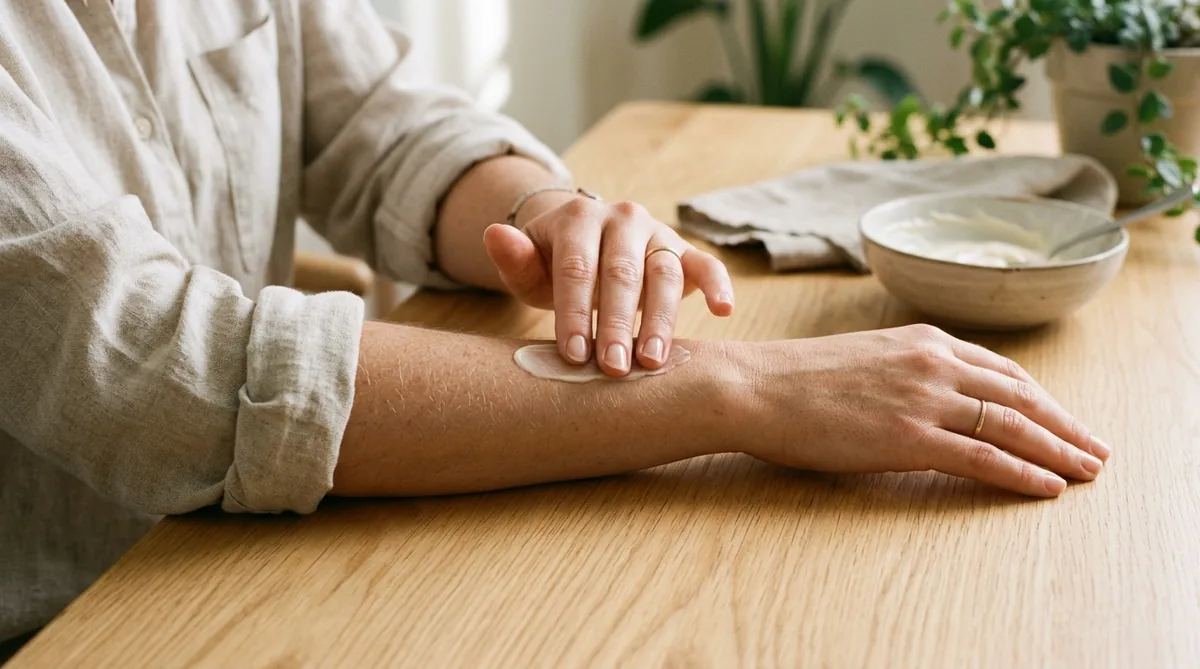
Massage is the most underrated item on this list: it costs nothing and takes anywhere from a few to about fifteen minutes a day.
How to do it:
- Massage the scar for 5–15 minutes, once or twice a day.
- Start with circular movements, then massage along the scar and finally across it.
- Gently roll the skin between your fingers.
- Use a scar care product to reduce friction.
Sun protection: the step that is easiest to neglect
A fresh scar is particularly sensitive to sunlight, so protecting it from the sun every day is essential. It is good practice to use a high-SPF sunscreen regularly, ideally for several months to a year after healing, and even longer if the skin is still red. Remember physical protection too, such as clothing or shade, especially on the face and hands, where cosmetics rub off easily.
The reason is simple: a young scar discolours easily, and the discolouration can last for years. Sun also prolongs the red stage, so a single careless day by the water can undo several months of care.
Ingredients with proven effects
- Silicones (gels, sheets) – international guidelines start with them when a scar is treated without procedures [1].
- Allantoin – has shown effectiveness in supporting repair processes and skin regeneration [2].
- Hyaluronic acid, panthenol – moisturise the skin and strengthen its protective barrier [3][4].
- Calendula – supports healing in the early stage of skin repair [5].
What to look for on the label
Good care rests on three pillars: deep moisturising, stimulating repair processes and eliminating irritants. The hypersensitive tissue around a scar responds much better to minimal, carefully selected formulas than to products with a long list of ingredients.

The order of the INCI list matters too: the substances at the top of the list form the base of the product.
Our BLIZNA Ointment for Scars and Discolouration is based on allantoin and onion extract [6], the two ingredients with the strongest research behind them among those listed above, complemented by hyaluronic acid, panthenol and boldo bark extract.
If the skin mainly needs soothing, Calendula Ointment is the better choice. Besides pot marigold, it contains aloe, mineral water from the Rabka health resort and allantoin, which additionally moisturises the skin.
When to show your scar to a specialist
Stop home care straight away and see a doctor if you notice any worrying signs, from changes in the tissue (sudden growth, hardening, a change in colour) to pain, itching or restricted movement. Acting on your own when the skin is remodelling abnormally risks making it worse. The final assessment of a particular scar always belongs to a specialist who will examine it in person and safely choose further treatment.
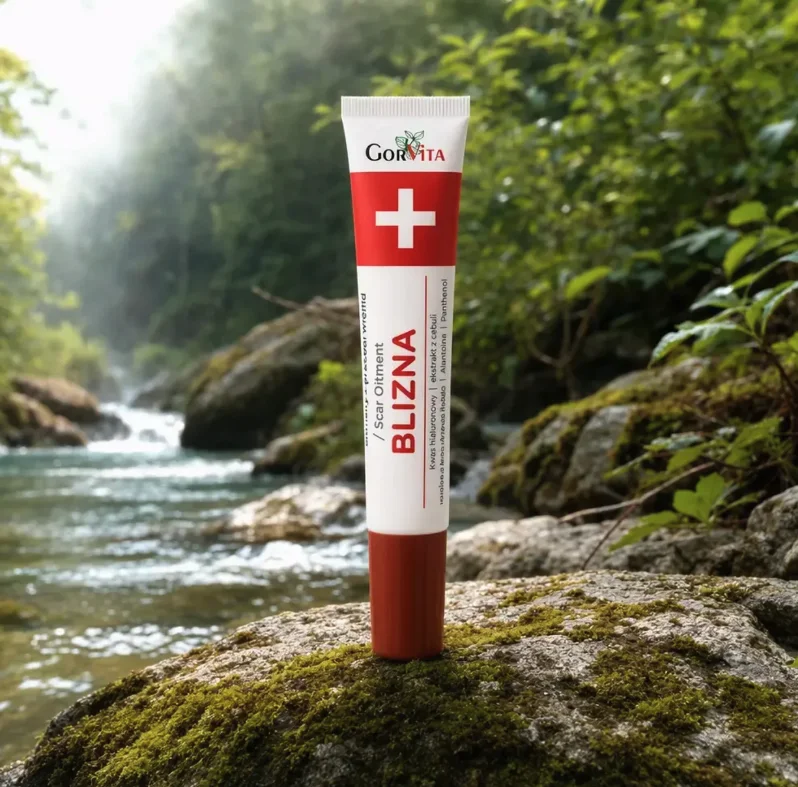
See BLIZNA Ointment for Scars and Discolouration →
Sources
[1] Gold MH, McGuire M, Mustoe TA et al. Updated International Clinical Recommendations on Scar Management: Part 2 – Algorithms for Scar Prevention and Treatment. Dermatologic Surgery 2014;40(8):825–831. Full text
[2] Araújo LU, Grabe-Guimarães A, Mosqueira VC et al. Profile of wound healing process induced by allantoin. Acta Cirurgica Brasileira 2010;25(5):460–466. PubMed
[3] Pavicic T, Gauglitz GG, Lersch P et al. Efficacy of cream-based novel formulations of hyaluronic acid of different molecular weights in anti-wrinkle treatment. Journal of Drugs in Dermatology 2011;10(9):990–1000. PubMed
[4] Proksch E, de Bony R, Trapp S, Boudon S. Topical use of dexpanthenol: a 70th anniversary article. Journal of Dermatological Treatment 2017;28(8):766–773. PubMed
[5] Givol O, Kornhaber R, Visentin D et al. A systematic review of Calendula officinalis extract for wound healing. Wound Repair and Regeneration 2019;27(5):548–561. PubMed
[6] Draelos ZD, Baumann L, Fleischer AB Jr et al. A new proprietary onion extract gel improves the appearance of new scars: a randomized, controlled, blinded-investigator study. The Journal of Clinical and Aesthetic Dermatology 2012;5(6):18–24. Full text
This article is for information only and does not replace medical advice.

